LUMOPAL

Be Your Pal, Power Up Your World

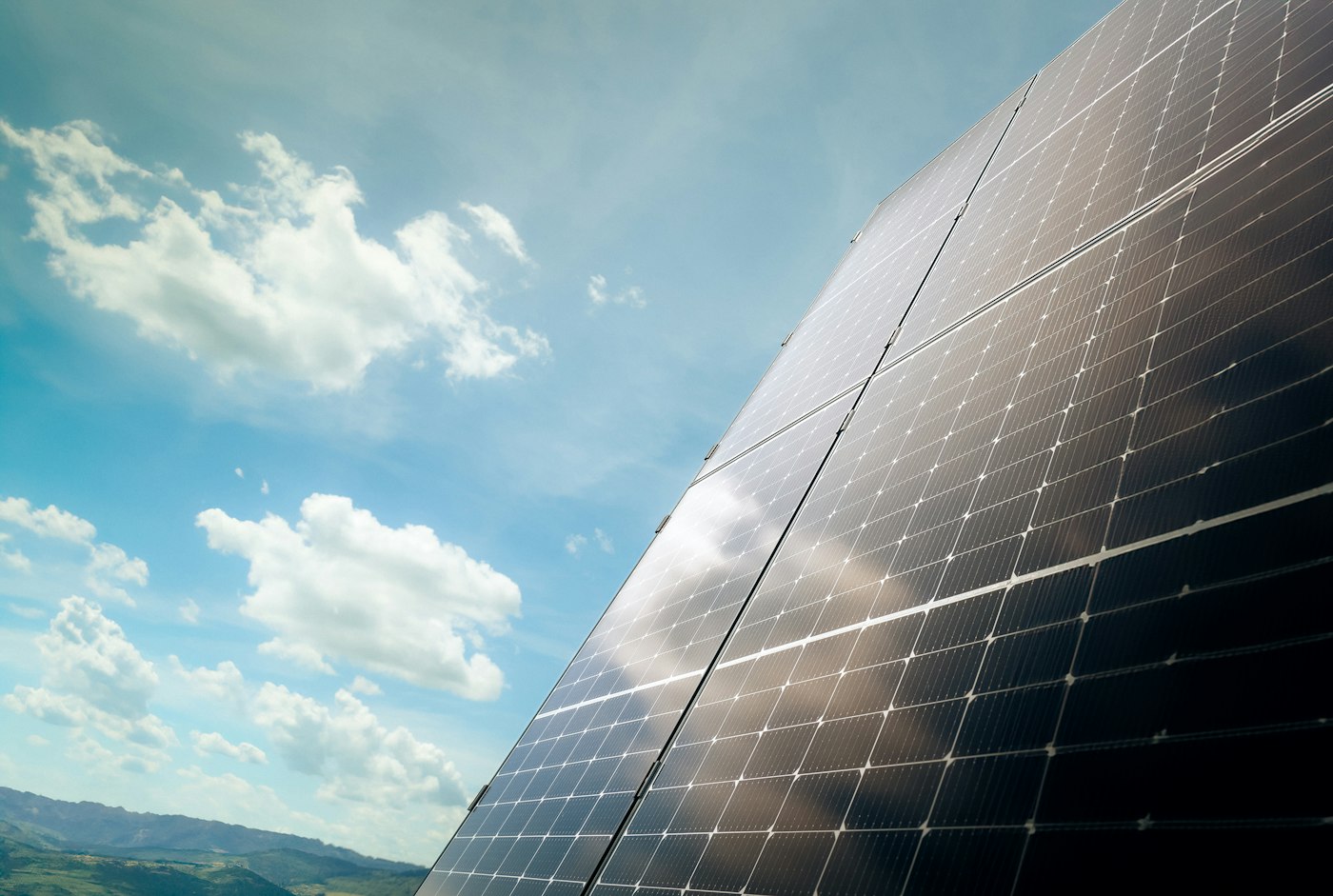
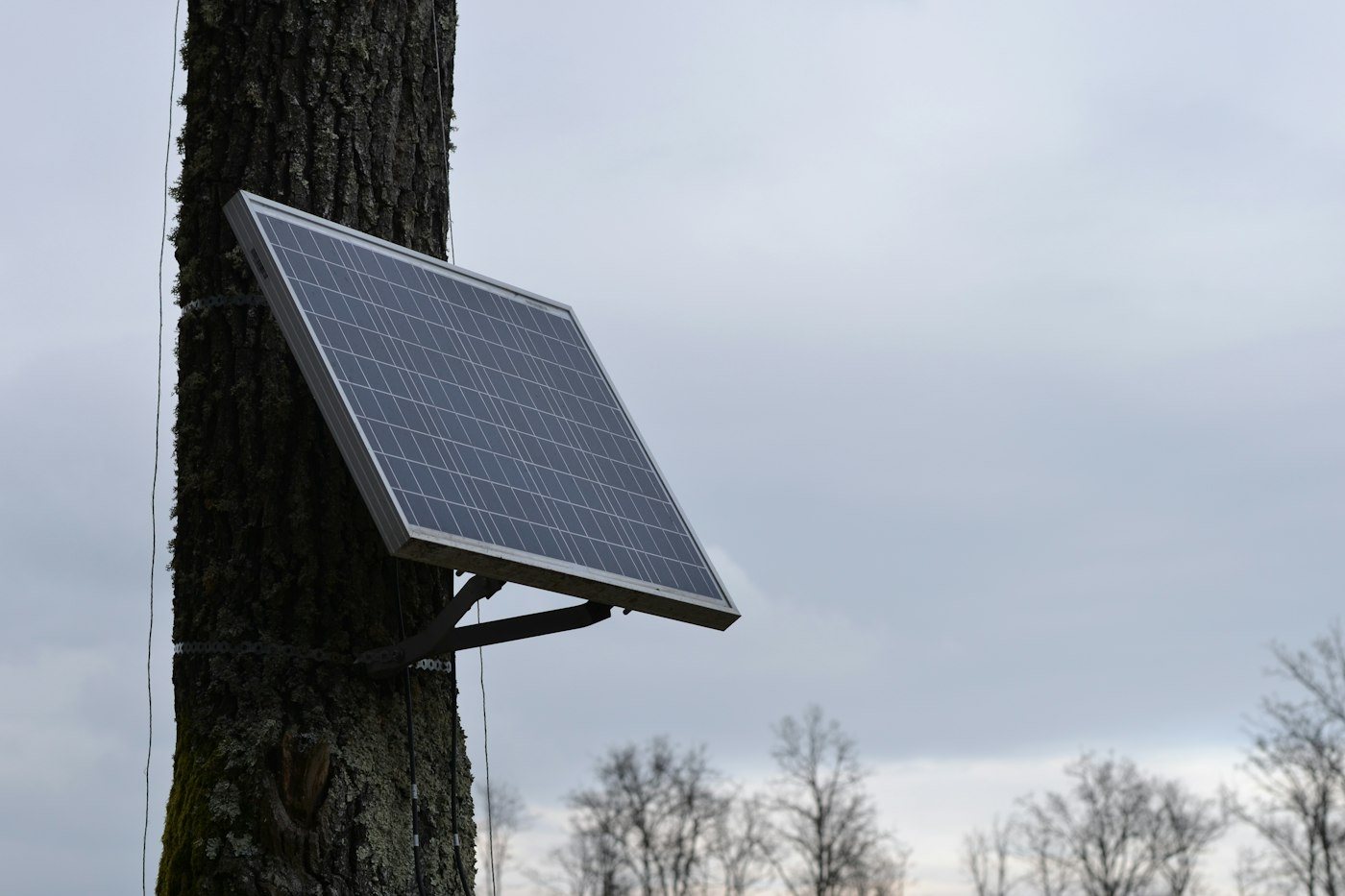
Solar panel placed on a tree

How to Choose a Solar Panel That Actually Keeps Your Outdoor Camera Running

Outdoor security cameras are only useful when they stay powered. That sounds obvious until you mount one on a tree, a fence post, or the far corner of a barn and realize there's no outlet within 50 feet. Extension cords aren't a real option. They're ugly, easy to trip over, and a quick way to turn your "smart" camera into a weather-damaged brick. Solar is the obvious fix. But not every solar panel plays nice with every camera. Pick the wrong one and you'll spend more time climbing ladders to recharge the battery than actually reviewing footage. Here's how to get it right the first time. Match the Power, Not Just the Panel Most wireless outdoor cameras idle at around 2–5 watts. That doesn't sound like much. But turn on night vision, motion alerts, cloud recording, and two-way audio, and the peak draw can spike higher. A 6-watt panel is the practical sweet spot for most setups. It's enough to cover daily consumption, top off the battery after a cloudy morning, and leave a little headroom for winter when the sun is weaker and the days are shorter. Go much smaller and you'll nurse the battery through bad weather. Go much bigger and you're paying for watts your camera will never use. Efficiency Matters More Than Size A bigger panel isn't always a better panel. What counts is how much usable power the panel actually converts from the light that hits it. Older PERC cells typically land around 20–22% efficiency. Newer back-contact (BC) cells push closer to 26%. In direct sun, that's a noticeable boost. In overcast, shaded, or early-morning light, it's an even bigger advantage because BC cells lose less performance when the conditions aren't perfect. For a camera mounted under an eave or in a spot that only gets partial sun, that gap can be the difference between "always on" and "dead by Tuesday." Outdoor Panels Need Real Protection Any panel living outside needs more than a plastic case and a hope for good weather. Look for IP54 at minimum. That means dust won't creep into the electronics and a direct splash from the side won't short anything out. If your climate includes heavy rain, snow, or high humidity, IP54 isn't optional. It's the baseline for a panel that will still be working in year two instead of fogging up and dying in year one. The Connector Problem Nobody Talks About You can find a great panel with the right wattage and efficiency, then discover it ships with a connector that doesn't fit your camera. Outdoor cameras still use a messy mix of USB-C, Micro-USB, and barrel DC jacks. Some panels include one tip. Some include none. A good solar kit should come with adapters. USB-C is ideal for newer cameras. DC and Micro-USB tips cover the older ones. If the product page doesn't show what's in the box, ask before you buy. A "universal" panel that only fits half your devices isn't universal. What a Real-World Setup Looks Like A few months ago I helped a friend set up a trail camera on a property line with no power. The camera claimed "solar compatible" but didn't ship with a panel. We paired it with a compact 6W back-contact panel, ran the included cable to the mounting bracket, and used one of the bundled adapters to match the camera's DC input. Since then, it's survived two storms and a week of rain without dropping below 40% battery. The whole thing took about ten minutes to install. That's the bar a good solar setup should clear: mount it, plug it in, and stop thinking about it. The panel we used happened to be from LUMOPAL. Their 6W option checks the boxes that actually matter for a camera install: BC cells at roughly 26% efficiency, IP54 outdoor rating, and a cable kit with Type-C plus the common DC/Micro-USB tips. It's not the biggest panel on the market, which is exactly the point. It matches the camera's draw instead of overpowering it. Don't Fall for These Three Traps Focusing only on peak wattage. A 10W panel that only performs well at noon isn't better than a 6W panel that keeps producing during overcast mornings. Ignoring the cable length. A 3-foot cable might force you to mount the panel in shade. Make sure the cable reaches the sunniest spot. Buying a bare panel. If the listing doesn't mention adapters, bracket, or cable, budget extra. Or buy a kit that includes them. A Few Minutes of Math Saves a Lot of Ladder Time Before you buy, add up your camera's real power draw. Check the specs for idle wattage and peak wattage. Multiply by how many hours of sun your mounting spot gets. Compare that to the panel's rated output adjusted for efficiency. If the math is close, give yourself a cushion. Cameras use more power in winter. Clouds happen. Motion alerts spike usage. A 6W BC panel is a safe middle ground for most wireless cameras precisely because it covers the average day and still leaves room for the bad ones. When power is invisible, you forget it's there. That's the whole goal of a solar camera setup. The right panel doesn't make your camera "kind of work off-grid." It makes the grid irrelevant. If you're planning a solar-powered camera install, take a look at LUMOPAL's 6W solar panel kit. It's built around the specs that actually matter for outdoor cameras: BC efficiency, IP54 protection, and the adapters you need out of the box. Be your pal, power up your world. Discover the LUMOPAL 6W Solar Panel for Outdoor Cameras: lumopal.com
Flashy fan.

Why a Solar-Powered Misting Fan Is the Smartest Way to Stay Cool in 2026

Summer is getting harder to ignore. Each year, heatwaves arrive earlier, stay longer, and push more people outdoors at the worst possible time. Camping trips, backyard cookouts, patio work, and open-air markets all start to feel like endurance tests. Traditional fans just move hot air around. Air conditioning ties you to a wall socket and sends your electricity bill through the roof. There is a better way to stay cool, and it does not require wiring, fuel, or a generator. A solar-powered misting fan combines two simple forces — evaporative cooling and free sunshine — into one portable package. Once you try it, the old options start to feel like compromises. The Real Problem with Summer Cooling Most cooling tools were built for rooms, not people. A standard fan only accelerates the air that is already in the room. When that air is 35 °C, a fan simply delivers hot air faster. It does not lower temperature. It does not even lower the feeling of heat in a meaningful way. Air conditioning works, but it is expensive, heavy, and tied to the grid. Take it outside and it becomes useless. Inside, it can easily double your energy bill during peak months. Portable options like battery fans or ice packs help for a few minutes, then fade. They are fine for short breaks. They are not a real solution for anyone spending real time outdoors. How a Misting Fan Actually Cools You A misting fan does something a regular fan cannot. It adds a fine spray of water to the airflow. As that mist reaches your skin, it evaporates. Evaporation pulls heat away from the surface it touches. That is the same reason sweat cools you down, except here the fan accelerates the process with a steady, gentle breeze. The result is a dramatic drop in how hot you feel. Studies on outdoor cooling often cite misting systems reducing the perceived temperature by several degrees in dry or warm climates. Even in humid areas, the moving air combined with fine mist still provides real relief. It is not magic. It is physics, applied in the simplest possible way. Why Solar Makes the Difference A misting fan needs three things to work: water, airflow, and power. Water you can refill. Airflow comes from the fan. The weak link has always been power. Solar fixes that. A portable solar panel turns sunlight into usable electricity during the exact hours you need cooling the most. You do not need an outlet. You do not need to swap out dead battery packs every two hours. You just set the panel in the sun and let it run. That changes the economics of staying cool. The energy is free. The setup is quiet. And as long as the sun is out, the fan keeps going. This also makes solar misting fans ideal for places where electricity is unreliable or unavailable: campsites, construction sites, remote patios, food stalls, and emergency shelters. Where a Solar Misting Fan Shines Some products are nice to have. A solar misting fan earns its keep in specific, high-value moments. Camping and RV trips : Keep the area around your tent or awning comfortable without draining your car battery. Backyard and patio time : Extend the hours you actually want to be outside. Outdoor work : Give landscapers, builders, and market vendors a safe way to cool down during peak heat. Events and gatherings : Make guests comfortable without running extension cords across the lawn. Emergency cooling : Stay safe during power outages or heat warnings. The common thread is freedom. You are no longer limited by where the nearest outlet is. What to Look for Before You Buy Not every solar misting fan is built the same. Here are the details that separate a useful purchase from a frustrating one. Power match : Make sure the solar panel can actually power the fan at full speed. A panel that is too small will give you a weak breeze and a disappointed afternoon. Battery or pass-through : Some fans run directly from solar. Others charge an internal battery first. A battery buffer means the fan keeps running when a cloud passes overhead. Spray quality : The best mist is fine and even. Coarse droplets leave you damp without cooling you down. Water capacity : A larger tank means fewer refills. For all-day use, this matters more than you think. Portability : If you plan to move it often, weight and setup time matter. Look for foldable solar panels and compact fan bodies. Powering It with the Right Solar Panel A misting fan is only as good as the power source behind it. That is where a portable solar setup becomes essential. The LUMOPAL Lum Solar 60 is built for exactly this kind of outdoor use case. With a compact A-grade monocrystalline panel, it delivers stable output for small appliances, USB devices, and DC-powered fans. Multiple output ports mean you can run the fan and top off a phone or power bank at the same time. It folds down for transport, opens in seconds, and is designed to take the kind of rough handling that happens on real trips. For anyone building a personal outdoor cooling station, it is the missing piece. You do not need a rooftop installation or a professional setup. You point it at the sun, plug in the fan, and get back to enjoying your day. A Smaller Choice With a Bigger Impact Buying a solar misting fan is not about chasing the latest gadget. It is about choosing a cooling system that matches how people actually live in the summer. More time outside. More heat to deal with. Less tolerance for high electric bills and tangled cords. The combination of solar power and evaporative cooling gives you real independence from the grid without sacrificing comfort. It is simpler, quieter, and cheaper to run than almost any alternative. If you are tired of choosing between being hot and being tied to a wall socket, this is the year to change the equation. Ready to build your own outdoor cooling setup? Explore portable solar panels and power solutions at lumopal.com .

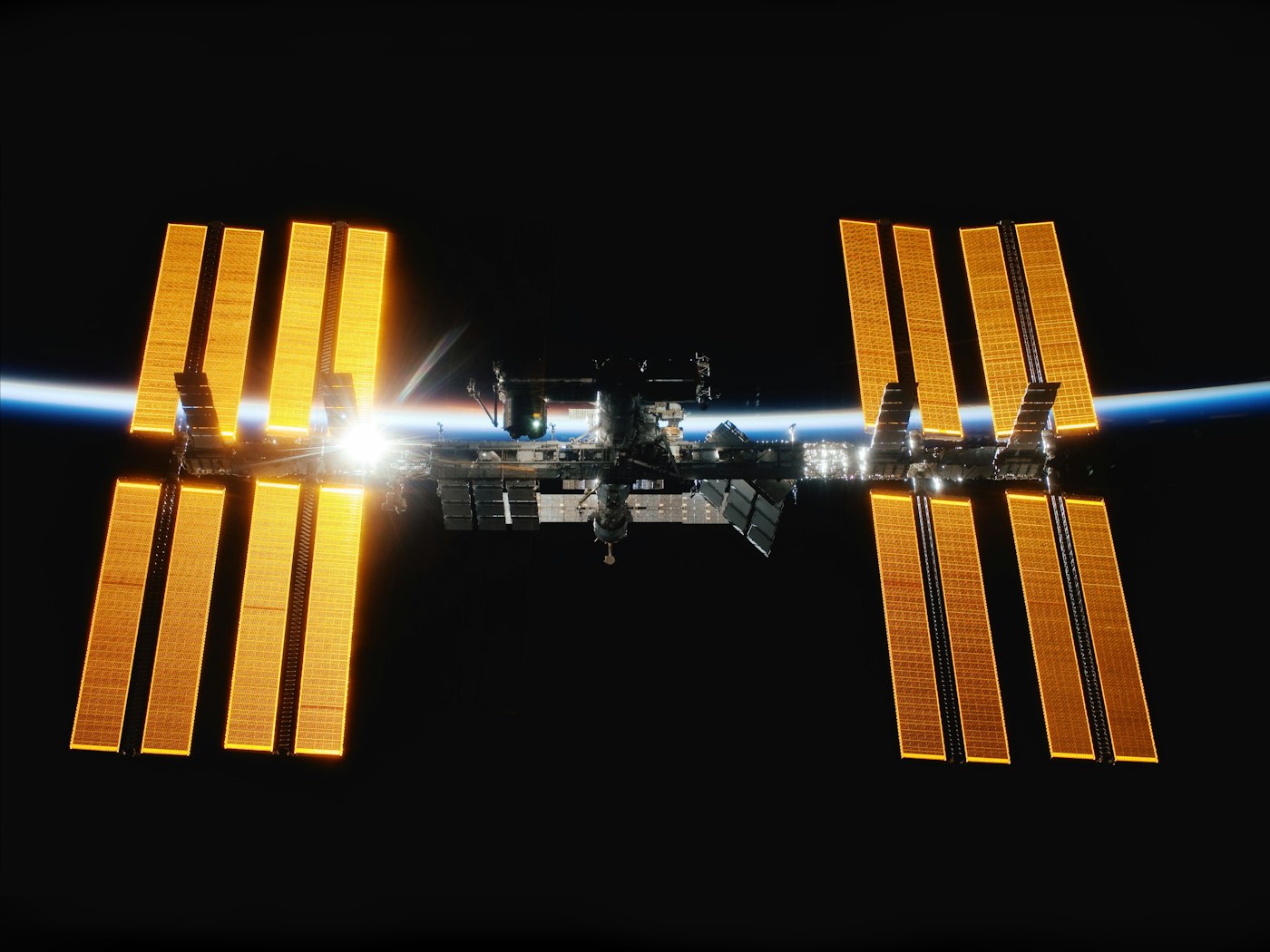
The International Space Station

Why the Best Place for Solar Panels Isn't on Earth

Every satellite, every space station, every Mars rover — they all share one thing in common. They're powered by the sun. You've probably seen the footage. Astronauts floating outside the International Space Station, carefully wiping down massive solar arrays. It looks routine. Almost mundane. But here's what doesn't add up at first glance: space is a nightmare for most electronics. Extreme radiation. Temperature swings from +120°C to -150°C. No atmosphere for protection. And yet — solar panels somehow work better there than anywhere on Earth. Let's unpack that contradiction. The Four Reasons Space Is Solar's True Habitat 1. No Atmosphere = 35-40% More Sunlight This is the biggest one. On Earth, sunlight has to fight through a thick layer of atmosphere before it reaches your solar panel. The air scatters, reflects, and absorbs a significant portion of the energy. By the time sunlight hits sea level, it's been filtered through an Air Mass of 1.5 (AM1.5). That's the "standard test condition" used to rate residential and portable solar panels. Up in space? It's AM0 — Air Mass zero. No atmosphere. No filtering. The solar spectrum arrives full strength, delivering roughly 1366 W/m² , compared to the ~1000 W/m² that reaches Earth's surface under ideal conditions. That's not a small difference. Space-based panels get 35-40% more raw solar energy than any panel on Earth, before any other factors come into play. 2. No Night, No Weather, No Seasons On Earth, your solar panel is lucky to get 4-6 hours of "peak sun" per day on average. Even in the sunniest places on the planet — places like the Atacama Desert — annual sunshine totals top out around ~2,200 hours per year . The ISS orbits Earth roughly every 90 minutes. It experiences 45 minutes of daylight, then 45 minutes of darkness, cycling 16 times per day. But here's the subtle truth people miss: while the ISS only spends about half its orbit in direct sunlight, that still adds up to ~4,380 hours of solar exposure per year — roughly double the annual solar input of the sunniest place on Earth. And there's no such thing as clouds, rain, snow, or "winter" up there. Every day is clear sky. 3. No Obstruction, No Shading, No Dust Ground-based solar has to contend with a thousand little thieves: A tree casting partial shade A neighbor's new building Bird droppings accumulating over weeks Dust settling after a dry spell Leaves covering the corner of a panel Each one might only reduce output by a few percent. But they add up. Industry data suggests that real-world solar installations on Earth produce 60-80% of their rated capacity on average, with shading and soiling accounting for a significant chunk of those losses. In space? There's nothing to cast a shadow on your panel (at least, not during the daylight portion of the orbit). No birds, no dust, no clouds. Every photon that hits the panel is putting in work. 4. Extreme Cold Improves Electrical Efficiency This is the most counterintuitive part. You'd think the intense temperature swings of space (+120°C in direct sunlight, -150°C in shadow) would damage solar panels. But the relationship between temperature and solar panel performance is the opposite of what most people expect: Solar panels become more efficient as they get colder. Here's why: solar cells generate voltage when photons knock electrons loose. When the cell is hot, the electrons vibrate more, making it harder to maintain voltage potential. When it's cold, everything stabilizes, and voltage increases. On Earth, a rooftop panel sitting in 35°C ambient air can easily reach 65-75°C surface temperature — hot enough to reduce efficiency by 15-20% compared to standard test conditions. In space, a panel in direct sunlight might reach 120°C (hotter than Earth!) but the temperature swings are managed through thermal design — and critically, the open-circuit voltage is much higher in space because the cell's base temperature in the shade is -150°C before it swings back to sunlight. The result: space solar panels operate at their peak theoretical efficiency, unconstrained by the thermal penalties that drag down every ground-based installation. Back to Earth: The Reality Check So space is solar's paradise. What does that mean for the rest of us who live firmly on the ground? It means that every solar panel on Earth — every rooftop array, every solar farm, every portable panel in your camping gear — is operating at a fundamental disadvantage compared to its cousins in orbit. Here's what a typical ground-based solar setup faces: Add it all up, and a 100W-rated panel on Earth might deliver 60-80W of actual usable power in real-world conditions. This is not to discourage anyone from using solar — far from it. It's to make a simple point: Because Earth's environment is fundamentally less ideal than space, choosing the right panel for your specific situation matters more than you think. Why 60W Is the Sweet Spot You Didn't Know You Needed Here's where this space-to-Earth comparison turns practical. When you're shopping for a portable solar panel — for camping, van life, emergency backup, or off-grid adventures — you're making a trade-off. And the environment is the reason that trade-off matters. 20W panels exist. They're small, lightweight, and cheap. But here's the hard truth: in real-world conditions (atmospheric loss + less-than-perfect sunlight + temperature rise), a 20W panel might output 12-15W. That's enough to trickle-charge a phone — and barely enough for anything else. If you're running a camping fridge, charging power banks, keeping a laptop alive, or powering lights, a 20W panel will leave you frustrated. It sounds good on paper, but under the sun, it just doesn't deliver. 100W panels exist too. They're powerful, capable of charging almost anything. But they also fold to roughly the size of a yoga mat, weigh 6-8 kilograms, and cost significantly more. If you're backpacking into a campsite, cycling across a country, or stashing gear in a small sedan, a 100W panel is a burden you'll feel with every step. 60W is the Goldilocks point. The 60W panel sits in a unique position: it produces enough power to actually make a difference in a real outdoor or emergency scenario — charging multiple devices simultaneously, keeping a portable power station topped up, running camping essentials — while remaining portable enough to carry without second thoughts. LUMOPAL Lum Solar 60W Portable Solar Panel is built around exactly this philosophy. Grade A monocrystalline cells for maximum real-world efficiency. IP64 waterproof and dustproof — not space-grade, but tough enough for the worst weather your campsite can throw at it. XT60 and USB-C outputs, so it plays nicely with modern power stations and electronics. All in a package that folds compact enough to grab on your way out the door. You don't need to send your solar panel to space. But when you're under a real sky — one with clouds and trees and the occasional passing storm — having a panel that's been engineered for efficiency and portability means the difference between power that actually works and a dead battery when you need it most. In a word Solar technology's ultimate proving ground isn't on Earth. It's in the void between planets, on the wings of satellites, on the decks of space stations — places where failure isn't an option, and where every watt must be earned. The panels up there operate at peak efficiency, bathed in unfiltered sunlight, never shaded, never dusty, never too hot to perform. Down here, we have to deal with clouds. And trees. And 65°C rooftops. And the weight of carrying power on our backs. But the same core technology — refined, tested, and proven in the harshest environment humanity has ever put machines into — is available in a panel small enough to fit in your trunk. The sun's true home may be in space. But it visits Earth every day. And as long as you've got the right panel, you'll be ready when it does. Explore the Lum Solar 60W and other portable power solutions at lumopal.com

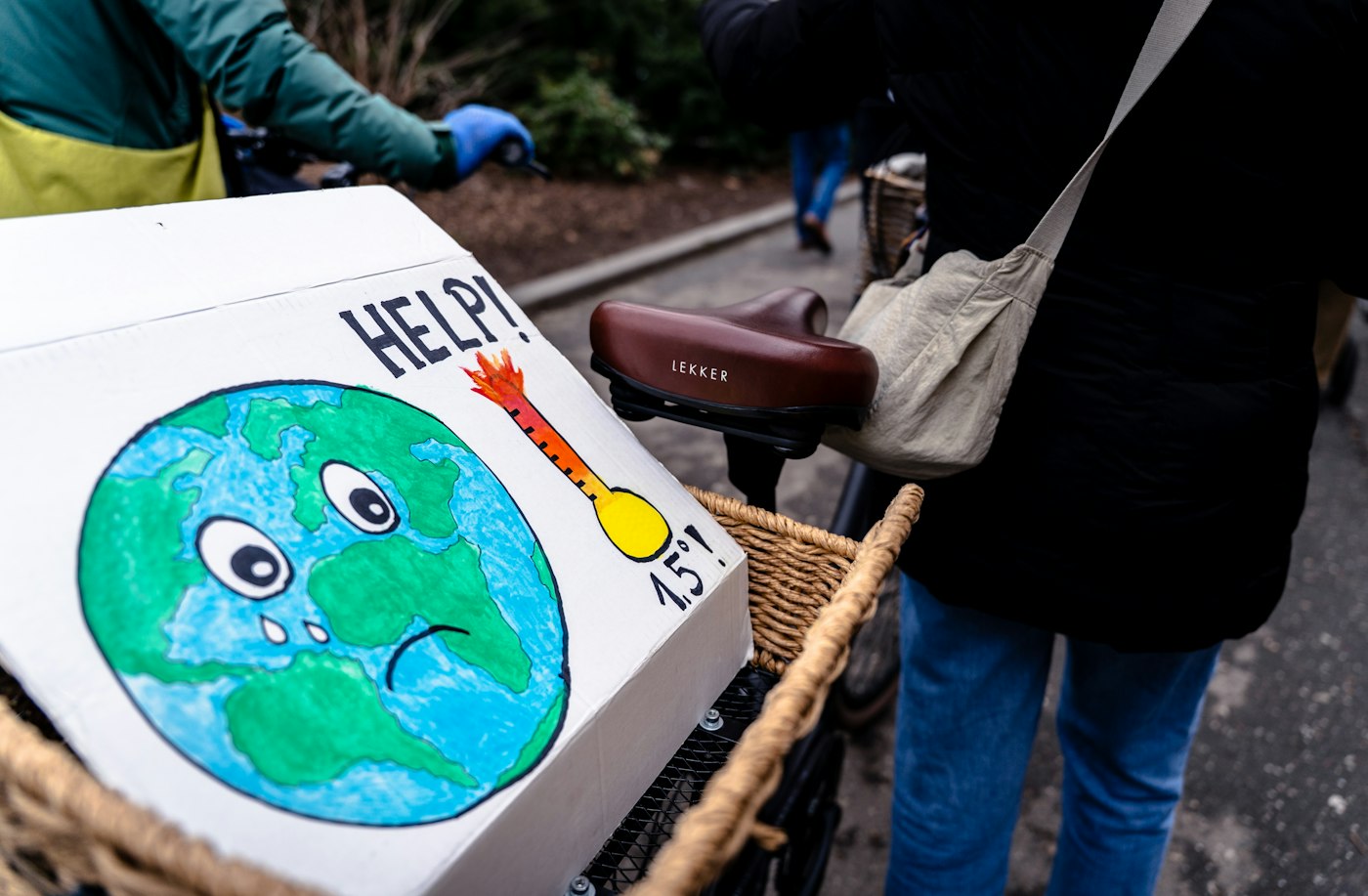
Bonn, Germany, protest "Fridays for Future"

The Real Cost of Staying Cool in a Hotter World

Summer heat is no longer the occasional inconvenience it used to be. Across the US, Europe, and large parts of Asia, record temperatures have become a regular headline. For many households, staying cool now means running an air conditioner for months on end—and watching the electricity bill climb with the mercury. The question is no longer whether you can afford a cooling device, but whether you can afford to keep it running. This shift matters because "economical" has changed meaning. A cheap window unit that doubles your power bill is not a bargain. A premium system that only works when the grid holds up is not a solution. What people actually need is a way to stay cool that does not depend on a perfect utility setup or a bottomless budget. Why "Cheap" Cooling Is Often the Most Expensive Air conditioning works, but the costs are layered. There is the upfront price, installation, maintenance, and then the monthly electricity. In places where summer temperatures stay above 90°F (32°C) for weeks, running AC can cost hundreds of dollars per month. Fans are cheaper to buy, but they only move air. They do not lower the temperature. On a hot day, a fan is a comfort trick, not a cooling strategy. Window shading, insulation, and ventilation help, but they are passive. They make a hot space slightly more bearable. They do not give you control. Real control means having a cooling source you can move, adjust, and power without relying entirely on a wall outlet. This is where the idea of portable cooling starts to make sense—not as a replacement for home AC, but as a smarter layer of defense. The Case for Portable, Off-Grid Cooling The most interesting change in cooling is not a new type of fan. It is the ability to power cooling gear without the grid. Portable solar panels have reached a point where they are light, durable, and efficient enough to run real devices in real conditions. When paired with the right gear, they change where and how you can stay cool. Think about the scenarios. You are camping in a place where the daytime shade is not enough. You are working in a garage or workshop without climate control. You are on a road trip and the car AC is struggling. You want cold drinks, a portable fan, or even a small evaporative cooler nearby, but there is no plug. A portable solar setup solves the power problem. It gives you the option to run a 12V fan, charge a power station, keep a mini-fridge going, or power a small misting system. The up-front cost exists, but the fuel is free. Over repeated use, especially in places with high electricity rates or unreliable grids, it pays for itself in a way that traditional cooling cannot match. What "Economical" Should Actually Mean When choosing a cooling strategy, it helps to think in total cost of ownership. Divide the total spend by the number of hours the solution actually keeps you comfortable. A $300 portable solar panel and power station combo that works for five years, multiple times a week, is often cheaper per use than a $100 fan that only helps when you are already near an outlet. Durability matters too. Cheap plastic fans break. Disposable cooling towels dry out. Batteries that cannot handle heat degrade quickly. A well-made portable solar panel with solid cells and weather-resistant construction keeps producing power long after the novelty gadgets have failed. That longevity is part of the economy. Flexibility is the third factor. The same solar panel that keeps you cool on a camping trip can charge your phone during a blackout, run lights in a shed, or keep a portable fridge cold on a beach day. The more situations it covers, the better the investment. Why LUMOPAL Built Around This Idea We started LUMOPAL because cooling and power should not be locked inside a house. The sun is already giving you energy. The question is whether you can capture it and put it to work where you need it. Our portable solar panels are designed for exactly this: real power in real outdoor conditions. They fold down, set up fast, and run the kind of gear that makes heat survivable. A fan. A power station. A small cooler. LED lights. All of it becomes possible without ever hunting for an outlet. This is not about rejecting AC. It is about having options. When the grid is expensive, unreliable, or simply not where you are, solar-powered portability is the difference between suffering and staying comfortable. Cooling Should Follow You, Not the Other Way Around The old model says you go to where the cool is. You stay inside. You hug the AC vent. You plan your day around the rooms with the best airflow. That model is expensive, limiting, and increasingly fragile. A better model is one where cool is something you can take with you. A shaded spot in the yard. A campsite by the water. A rooftop at dusk. With the right portable power setup, you can run cooling gear in any of those places without begging the grid for help. That is the real economy of staying cool. Not buying the cheapest box at the store. It is building a system that lets you use free sunlight to beat the heat wherever you happen to be. Check out LUMOPAL portable solar panels and power solutions at lumopal.com .

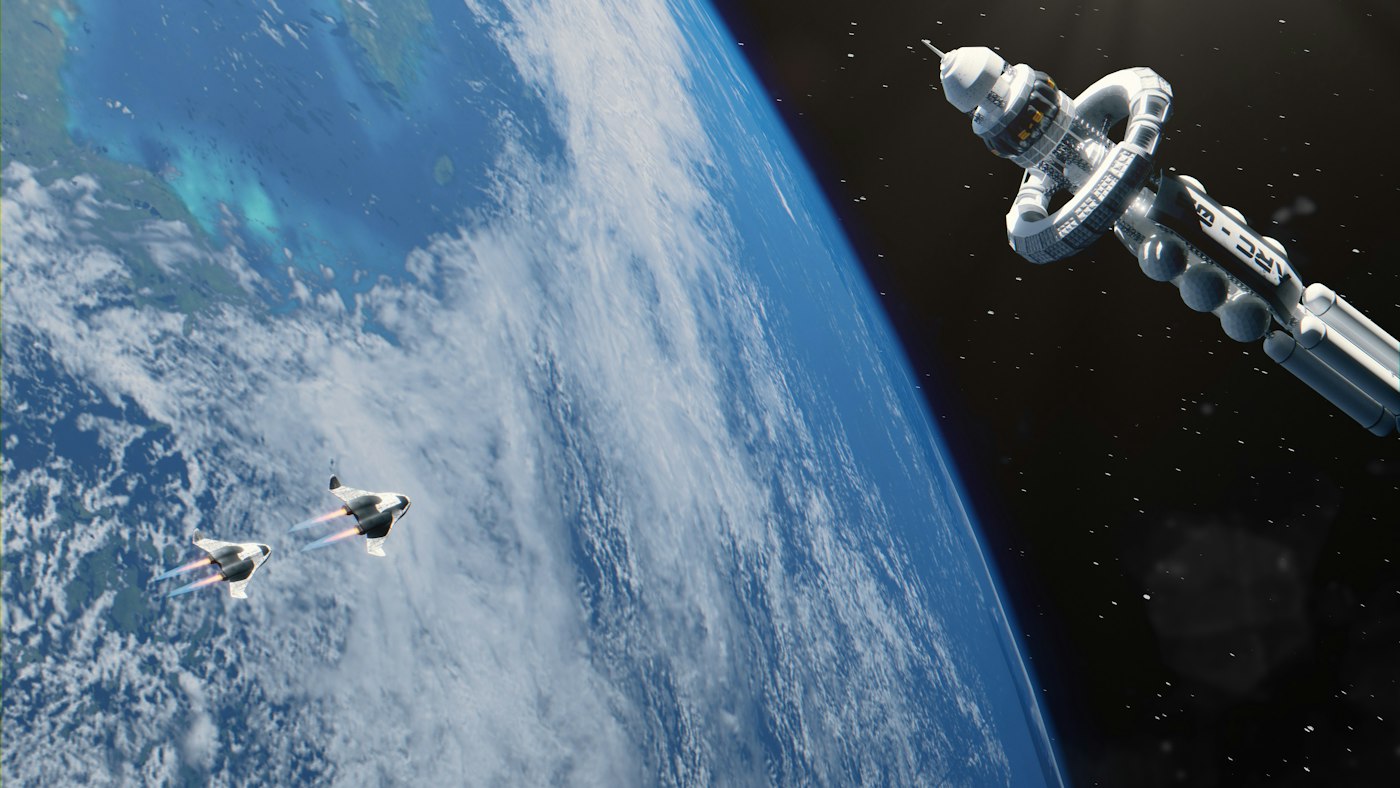
an artist's rendering of a space station in orbit

Can We Actually Build Data Centers in Space?

It sounds like a sci-fi plot. Beaming power from orbit, racks of servers floating in zero gravity, AI models trained by starlight. But the idea of building data centers in space has quietly gained traction among engineers and researchers who see it as an answer to two growing problems: the energy hunger of AI and the thermal limits of ground-based infrastructure. The conversation matters more than you might think. Every new AI model, every cloud service expansion, every crypto transaction adds to a data center load that already consumes about 1-2% of global electricity. That number is climbing fast. So the question isn't really whether space-based data centers are cool — it's whether they solve something ground-based ones can't. Solar Power, Without the Atmosphere Here's the part that gets solar engineers excited. On Earth, sunlight passes through atmosphere, clouds, dust, and pollution before hitting a solar panel. By the time it arrives, roughly 30-40% of the energy has already been scattered or absorbed. In orbit, there's none of that. A solar panel in space receives the full, unfiltered spectrum, and it receives it almost continuously — no night cycle if you pick the right orbit. For context, a portable solar panel on Earth might generate electricity for 4-6 peak hours a day, depending on latitude and weather. In low Earth orbit, that same panel could theoretically produce power close to 24/7. The efficiency gain isn't incremental — it's a different category entirely. This is the same principle that makes ground-based solar technology from brands like LUMOPAL effective in the first place: maximizing surface area efficiency, optimizing angle and material, squeezing every watt out of available sunlight. The physics don't change in space — they just get dramatically more favorable. The Heat Problem Nobody Talks About But here's the catch. Data centers generate enormous amounts of heat. On Earth, we handle this with air conditioning, liquid cooling, evaporative towers, and sometimes entire rivers. None of that works in space. Space is a vacuum. There's no air to carry heat away through convection. The only way to dump heat in space is thermal radiation — essentially glowing infrared light into the cold void. It works, but it's orders of magnitude less efficient than convective cooling on Earth. So you end up with a paradox: the same environment that gives you abundant solar energy also traps the heat your equipment produces. A space data center would need massive radiator arrays — potentially larger than the solar panels themselves — just to keep servers from cooking themselves. This single challenge might be the hardest engineering problem in the entire concept. Getting Power Back — Or Using It There If you build a solar farm in orbit, you face an obvious question: what do you do with the electricity? Wireless power transmission — beaming energy via microwaves or lasers down to receiving stations on Earth — has been studied for decades. The physics are sound. The efficiency is not. Atmospheric absorption, beam divergence, and conversion losses mean that by the time orbital solar energy reaches a ground station, you might recover single-digit percentages of what was generated. But here's the flip side: if the data center itself is in space, you don't need to beam power anywhere. The energy is consumed on-site, by the servers, right where it's generated. The waste heat gets radiated into space. The data gets beamed down as radio or optical signals — which is something we already do with satellite communications every day. In that sense, a space data center is actually more self-consistent than an orbital solar power station. It doesn't need to solve the power transmission problem at all. The Real-World Barriers Engineering challenges aside, the practical obstacles are significant. Launch costs. Even with Starship bringing per-kilogram launch prices down dramatically, putting thousands of tons of server hardware into orbit is not cheap. A single medium-sized data center might require hundreds of launches. Radiation. Cosmic rays and solar particles degrade electronics over time. Earth's atmosphere and magnetic field protect ground-based equipment. In orbit, you need shielding or radiation-hardened components — both of which add weight and cost. Maintenance. When a server fails on Earth, someone walks in and replaces it. In space, that's not an option. You'd need redundant systems, autonomous repair capabilities, or accept regular hardware failures as a cost of doing business. Space debris. The orbital environment is getting crowded. A collision with even a small piece of debris could destroy a data center module. Maneuvering capability and shielding add more weight. None of these are dealbreakers individually. Together, they make the economics challenging for the foreseeable future. So Why Does This Matter Now? The space data center concept isn't going to replace your local server farm next year. But the research driving it — high-efficiency solar capture, advanced thermal management, radiation-tolerant computing — has direct applications on the ground. Every innovation in solar panel efficiency, thermal radiator design, and low-power computing that comes from space research flows back into products that work right here. The same engineering that would keep a server rack cool in orbit can make a portable solar setup more efficient in a campground. LUMOPAL's approach to solar technology — compact, high-conversion panels designed for off-grid scenarios — lives in the same design space as these aerospace challenges. Squeeze more from less. Handle heat intelligently. Make every watt count. Whether the application is a Mars-bound data pod or a weekend camping trip, the fundamentals don't change. The real takeaway from the space data center debate isn't about building one. It's about what we learn by trying. And the lessons — better solar, better cooling, better efficiency — are already showing up in products you can hold in your hand today. Explore LUMOPAL's portable solar solutions at lumopal.com

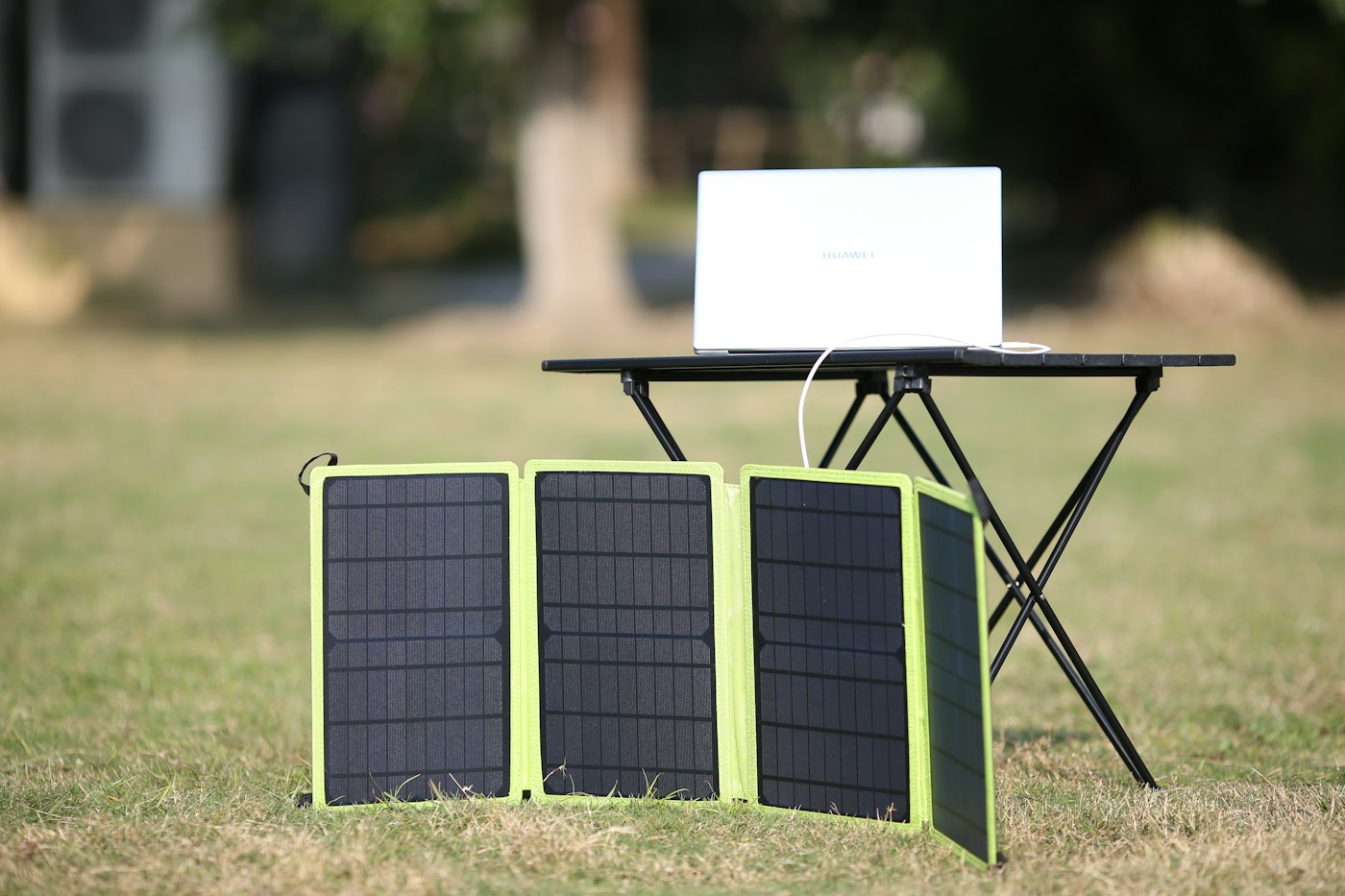
a table with a laptop on it

Summer Sun Blazing = Maximum Solar Output? Not So Fast — Here's Why

Picture this: it's a sweltering July afternoon. The sun is pounding down, the pavement is almost too hot to walk on, and your portable solar panel is sitting in direct sunlight doing exactly what it's supposed to do — soaking up those rays. But here's the uncomfortable truth: that solar panel is probably performing worse right now than it did on a mild spring day with fewer hours of direct sun. Sounds counterintuitive, right? More sunlight should mean more power. That's the conventional wisdom, and it's wrong in a way that matters a lot if you rely on portable solar for camping, RV life, overlanding, or off-grid backup. The culprit isn't the sun — it's heat . And the gap between what people expect and what actually happens can be as high as 20–25%. Let's break down why. The Temperature Coefficient: Solar's Hidden Tax Every crystalline silicon solar panel has a spec called the temperature coefficient of maximum power (Pmax) . It's usually expressed as a negative percentage per degree Celsius, something like –0.35%/°C or –0.45%/°C . What does this number actually mean? Solar panels are rated under Standard Test Conditions (STC) , which assumes the panel's cell temperature is exactly 25°C (77°F) . That's the temperature at which a "60W" panel delivers its rated 60 watts. But in real-world summer conditions, a dark solar panel sitting in direct sunlight can easily reach 65–70°C (149–158°F) on its surface. That's 40–45°C above the STC baseline. Here's where the math hurts: If your panel has a temperature coefficient of –0.40%/°C : 65°C – 25°C = 40°C above STC40 × –0.40% = –16% power loss A "60W" panel is now effectively ~50W At 70°C : 70°C – 25°C = 45°C above STC45 × –0.40% = –18% power loss That 60W panel is now delivering ~49W In extreme cases (dark surface, poor ventilation, midday in hot climates): Panel temp can hit 80–85°C Power loss: 22–24% Your 60W panel? More like 45–47W That's nearly a quarter of your rated output gone — not because there's less sun, but because the panel is literally too hot to operate efficiently. Why does this happen? Solar cells are semiconductors. Like most semiconductors (CPUs, LEDs, transistors), their performance degrades as temperature rises. Higher temperatures increase the internal recombination rate of electron-hole pairs in the silicon — meaning fewer charge carriers make it to the circuit. The voltage drops noticeably, and while current rises slightly, the voltage drop dominates. The net effect is a significant reduction in total power output . This isn't a defect. It's fundamental physics of crystalline silicon. Every panel does this, from cheap generic units to premium name brands. The only difference is how much . Summer's Four Hidden Penalties It's not just temperature. Summer brings a set of compounding factors that most people never account for. 1. The Heat Penalty (the Big One) Even on a perfectly clear 35°C (95°F) day, your panel's internal temperature will climb to 60–70°C with no active cooling. That alone strips 15–20% off your rated output. 2. Reduced Air Mass and Atmospheric Clarity Summer heat creates humidity and haze. More water vapor and particulate matter in the atmosphere scatter and absorb incoming solar radiation. On a clear summer day, the direct normal irradiance (DNI) hitting the panel surface can actually be lower than on a crisp, dry spring day — even though the summer sun feels more intense. The "feel" of intense summer sun is mostly infrared radiation (heat), not the visible/UV spectrum that solar panels convert to electricity. 3. Afternoon Convection Clouds In many regions, summer afternoons bring convective cloud buildup — those fluffy cumulus clouds that roll in around 2–3 PM. This means intermittent shading and a net loss of direct sunlight during peak hours. 4. High Ambient Temperature = Poor Passive Cooling If the ambient air is already 35–40°C, the temperature gradient between the panel and the air is small. Heat doesn't dissipate efficiently. The panel runs hotter, longer. Contrast this with a spring day at 20°C: the panel heats up to maybe 50–55°C, loses only 10–12%, and the cooler ambient air helps pull heat away faster. So Which Season Is Actually Best? The answer might surprise you: Spring and Fall. Net output = (rated power × thermal derating) × daily solar hours Spring's combination of low thermal loss and decent day length often produces the highest daily energy harvest. Summer's extra sunlight hours can't fully compensate for the 15–20% thermal penalty. Real-World Data Research from the National Renewable Energy Laboratory (NREL) and multiple field studies consistently show this pattern: In temperate climates (30–45°N): April/May and September/October produce the highest kWh per rated watt per day In hot arid climates (desert regions): Spring and late fall outperform mid-summer by 10–18% In tropical climates: The "cooler" rainy season months sometimes match or exceed the hot dry season in daily yield A study published in Solar Energy Materials & Solar Cells tracked monocrystalline panels across four seasons and found that July panels ran 18°C hotter on average than April panels , resulting in a 7.5–9% reduction in conversion efficiency — despite receiving roughly equal daily irradiance. What You Can Actually Do About It ✅ Maximize Airflow Elevate your panel. A gap of 5–10 cm underneath allows air to circulate and carry heat away. Lumopal panels come with built-in kickstands for exactly this reason. Use them. ✅ Orient for Morning and Late Afternoon The hottest part of the day (12–3 PM) is when your panel is least efficient. Shift your panel orientation slightly toward the east in the morning and west in the afternoon to capture more energy during cooler hours. ✅ Choose Panels with Better Temperature Coefficients The Lumopal Lum Solar 60W uses A-grade monocrystalline cells with a temperature coefficient of –0.35%/°C — better than the industry average. At 65°C, you're losing ~14% instead of ~16–18%. ✅ Use Reflective Ground Covers Place a reflective tarp underneath your panel to reduce ground-radiated heat and boost reflected light. ✅ Keep Panels Clean A thin layer of summer dust can reduce output by 5–15%. A quick wipe before setup pays for itself in the first hour. ✅ Avoid Hot Spot Mounting Surfaces Never mount directly on dark metal surfaces without an air gap. These surfaces can reach 70–90°C in summer sun. The Lumopal Advantage We designed the Lum Solar 60W and 100W with real-world conditions in mind: A-Grade Monocrystalline Cells: Lower defect density = less efficiency loss at high temperatures –0.35%/°C Temperature Coefficient: Among the best in portable solar Built-in Kickstand: Promotes airflow and optimizes tilt angle ETFE Lamination: Better light transmission and heat dissipation IP64 Rated: Dust-tight and water-resistant for summer conditions 2-Year Warranty: Built for real-world use The Bottom Line The difference between a 25°C spring day and a 35°C summer afternoon can be a 15–20% reduction in your panel's effective output. Understanding this changes how you plan your solar setup: Don't chase midday sun — it's when your panel is least efficient Prioritize ventilation — a few centimeters of air gap can save you 5–10% of output Know your panel's temperature coefficient — it's one of the most underrated specs Change your expectations — if your 60W panel delivers 48W on a hot July afternoon, it's not broken. It's hot. The best season for solar isn't the one with the most intense sun. It's the one with the best balance of light, temperature, and atmosphere. For most of us, that's spring and fall. But when summer does roll around — and you still need power for that camp fridge or your devices — the right panel, placed the right way, makes all the difference.

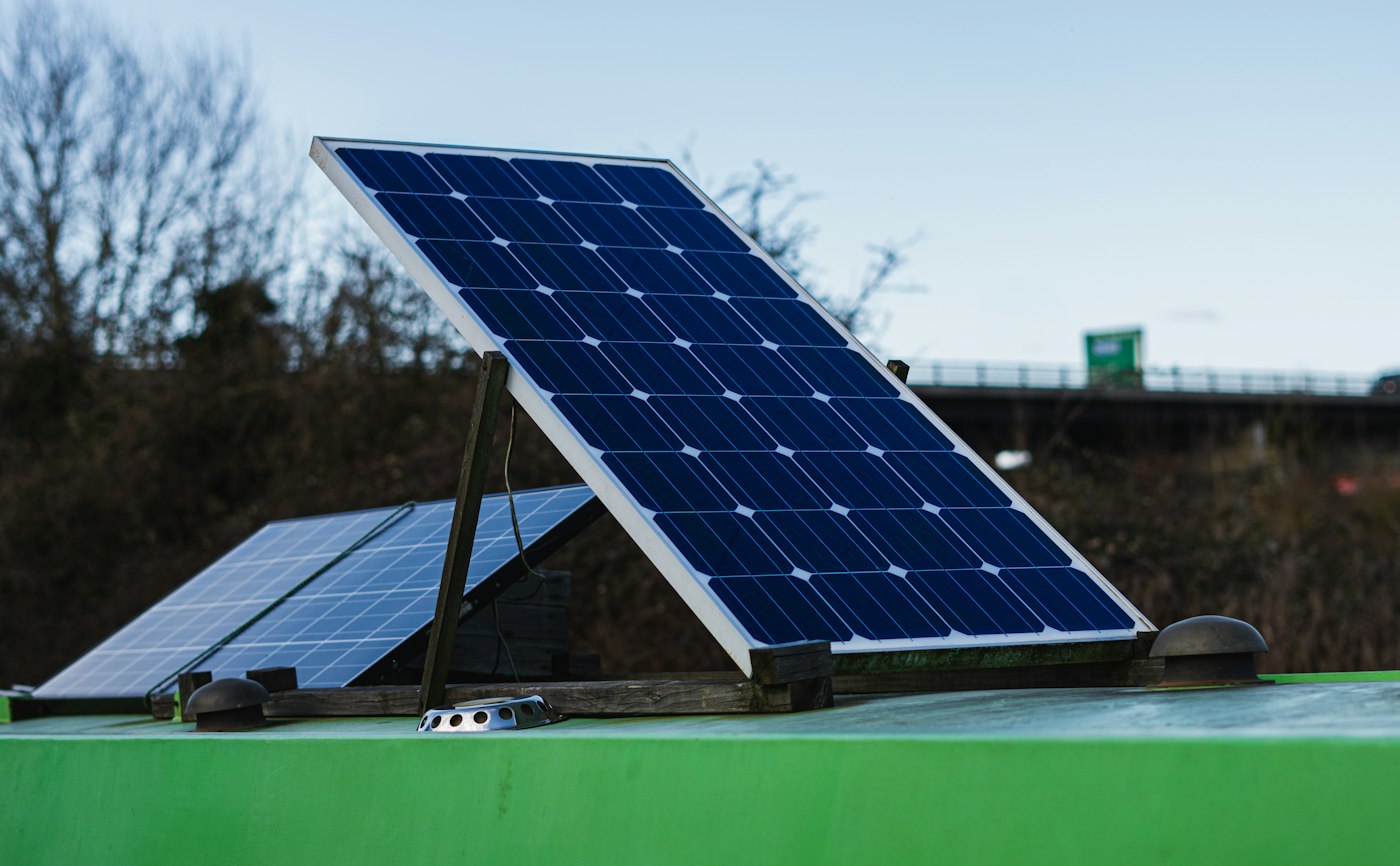
blue and white solar panel on green metal bar during daytime

Why Solar Panels Are Getting More Expensive in 2026 - China Export Tax Rebate

If you've been shopping for solar panels in 2026, you've probably noticed something unsettling: prices are going up. After years of watching solar costs fall almost without interruption, installers and homeowners alike are seeing quotes climb 5–10% compared to late 2025. Component prices, which hit rock bottom in 2024, are now rebounding from historic lows. The culprit isn't supply shortages or raw material spikes — at least, not primarily. The biggest driver behind this price shift is a policy change that happened thousands of miles away: China has officially cancelled export tax rebates for photovoltaic products , effective April 1, 2026. This isn't just a regulatory footnote. It's a structural reset for the global solar industry. Here's what happened, why it matters, and what it means for anyone buying solar in the next few years. The Policy: How China's PV Export Tax Rebates Disappeared China's solar export tax rebate program dates back to 2013. In the industry's early days, the government used VAT rebates to help domestic manufacturers compete on price in international markets. At its peak, the rebate rate stood at 13% — meaning exporters got back 13% of the value-added tax they'd paid on production inputs. It worked. China went from a solar upstart to controlling over 80% of global PV module production. But what once served as a launchpad became a crutch — and then a problem. The policy covers 249 PV product categories and 22 battery product categories , including lithium-ion and nickel-metal hydride batteries. The announcement came on January 9, 2026, giving the industry roughly three months to prepare. Why did China do this? Three reasons, all intertwined: Ending a price war nobody was winning. From 2021 to 2025, polysilicon prices fell 76.3%, wafer prices dropped 82.8%, cell prices fell 71.1%, and module prices declined 62.1%. Even industry giants like LONGi, Trina Solar, and Tongwei were posting losses. The rebate was effectively subsidizing rock-bottom export prices that were destroying profitability across the entire supply chain. Reducing trade friction. Export rebates have long been criticized by the US and EU as a form of indirect subsidy, fueling anti-dumping and countervailing duty cases. China's PV industry accounted for 96% of global polysilicon capacity and 91.3% of global cell capacity in 2025 — dominance that attracted scrutiny. Removing the rebate takes away one of the main arguments used in trade disputes. The industry outgrew the policy. China's PV sector no longer needs training wheels. The China Photovoltaic Industry Association explicitly supported the move, stating that the rebate had become a de facto subsidy for overseas end markets, draining domestic profits while increasing trade friction risk. Short-Term Impact (0–12 Months): The Rush, the Shock, and the Bounce The "Grab-and-Ship" Frenzy of March 2026 When you give an entire industry a three-month heads-up that a 9% cost advantage is about to vanish, they do the obvious thing: rush every possible order out the door before the deadline. That's exactly what happened. March 2026 saw record-breaking PV exports : Solar module exports hit 32 GW — nearly double February's volume Cell export value surged 84% year-on-year Total "new three" exports (PV, batteries, EVs) exceeded $21.4 billion, up 72% YoY 50 countries imported Chinese solar products at record levels This wasn't organic demand growth. It was front-loading — pulling Q2 orders into Q1 to capture the last rebate window. Reuters confirmed that solar cell exports hit a three-year high in March, driven almost entirely by this pre-deadline rush. April and Beyond: The Hangover When April 1 arrived, the rebate door slammed shut. The immediate consequences were predictable: Export volumes dropped from March's artificial peak. April cell exports fell to $4.7 billion from March's $6.4 billion — but remained above January and February levels, showing underlying demand resilience. Costs went up by roughly 9% for PV exporters. SMM estimated that every 210R module lost ¥46–51 in profit. For thin-margin operations, this was existential. SMM projected a 5–10% decline in module export volumes as a direct result of the policy. Prices began recovering from historic lows. Global solar panel prices, which had been in freefall, started to stabilize and inch upward as manufacturers passed costs downstream. The Geopolitical Amplifier The rebate cancellation didn't happen in a vacuum. The Iran conflict that erupted in late February 2026 sent oil prices soaring, which paradoxically boosted solar demand — countries dependent on imported energy scrambled for alternatives. Shipping costs through the Strait of Hormuz tripled. Solar panels became a hedge against energy insecurity, especially in Southeast Asia, Africa, and the Middle East. So while the rebate cut raised prices on paper, the real-world picture was messier: demand from energy-anxious nations partially offset the price increase, keeping export volumes healthier than analysts expected. Long-Term Impact (1–3+ Years): A Healthier Industry Emerges Industry Consolidation: Survival of the Fittest Here's the uncomfortable truth: China's PV industry had a 3x overcapacity problem . In 2026, global polysilicon demand was estimated at 102–118 million tons, but China's domestic capacity alone stood at 329 million tons. Even running at one-third capacity was enough to satisfy global demand. The rebate removal accelerates what was already inevitable — a brutal shakeout. Marginal producers who survived purely on volume and rebates will exit. The survivors will be companies with genuine technology advantages, global manufacturing footprints, and balance sheets strong enough to weather the transition. This isn't speculation. On the first trading day after the policy announcement, solar stocks rose . The market understood: removing the rebate forces discipline, kills the race-to-the-bottom pricing, and rewards quality over volume. Global Manufacturing Shift: "Made Everywhere, Sold Everywhere" Chinese manufacturers aren't waiting around. The biggest players are already building capacity overseas: LONGi, Jinko Solar, Trina Solar, JA Solar all have manufacturing bases in Southeast Asia, the Middle East, and North America Risen Energy disclosed 6 GW of overseas cell capacity and 10+ GW of module capacity already operational The strategy has shifted from "made in China, sold globally" to "made globally, sold globally" This decentralization has mixed effects: it reduces trade friction (products made in Vietnam or Thailand don't carry the "China subsidy" label), but it also increases production costs since overseas facilities are generally less efficient than China's ultra-optimized domestic lines. Trade Friction Easing Removing the export rebate directly addresses one of the West's biggest complaints. When Chinese PV products no longer carry an explicit tax rebate, the "unfair subsidy" narrative loses steam. This doesn't eliminate all trade barriers — the EU is separately tightening security rules around Chinese inverters, and US tariffs remain in flux — but it removes a major rhetorical weapon from the anti-dumping arsenal. Emerging Market Demand Is Structural, Not Subsidy-Driven The most important long-term signal from the April data is this: even without rebates, exports didn't collapse. Southeast Asia and Africa saw 267% year-on-year growth in PV imports from China in March, and demand continued through April. These markets aren't buying because solar is cheap due to subsidies — they're buying because: Their power grids are unreliable or non-existent Solar radiation levels are excellent Energy demand is growing faster than grid infrastructure Solar is a necessity, not a lifestyle choice This demand is price-inelastic within a reasonable range . A 5–10% price increase doesn't kill the project; it just makes the payback period slightly longer. The End of "Too Cheap to Be Sustainable" For years, the solar industry operated under a paradox: panels were so cheap that manufacturers were bleeding money, but any attempt to raise prices was met with buyer resistance and competitor undercutting. The rebate removal breaks this cycle by creating a cost floor that everyone has to respect. Consumers will pay more — but they'll also get more stability. When manufacturers can actually make a profit, they can invest in R&D, honor warranties, and maintain quality control. A solar panel is a 25-year investment. Buying from a company that's losing money on every unit is a risk that the rebate removal helps eliminate. What This Means for Solar Buyers If you're in the market for solar panels — whether for a rooftop system, a commercial installation, or portable off-grid power — here's the practical takeaway: Prices are rising, but from absurdly low levels. A 5–10% increase from 2024's bottom doesn't mean solar is expensive again. It means the unsustainable price war is ending. Quality matters more than ever. In a consolidating industry, the manufacturers that survive will be the ones with real products and real support. Cheap no-name panels from companies that might not exist in two years are a false economy. Act sooner rather than later. The price trend is upward. Battery rebates are still phasing out (hitting zero in January 2027), so solar + storage costs may face additional pressure. This is exactly why at LUMOPAL , we've never competed on price alone. Our portable solar panels use Grade-A monocrystalline silicon cells with real-world output efficiency ≥98% — no inflated wattage claims, no corner-cutting. IP64 weather protection means they handle rain, dust, and the rough stuff that outdoor gear endures. And we back it with a 2-year warranty because we believe solar products should work as hard as you do, for years — not just until the warranty card collects dust. When the industry's race to the bottom finally ends, what's left standing is the gear that was built to last. The Bottom Line China's export tax rebate cancellation is the most significant solar policy shift in a decade. In the short term, it's messy — price volatility, supply chain reshuffling, and corporate casualties. But in the long term, it's exactly what the industry needed: an end to profitless growth, a path toward sustainable pricing, and a reset that rewards quality over quantity. Solar panels getting more expensive isn't bad news. It's the bill for years of pretending they could keep getting cheaper forever. The era of $0.10/watt panels was never going to last. The era of reliable, fairly priced solar that actually supports a healthy industry? That's just getting started.

solar panel

What the Post-US-Israel-Iran Era Means for the Solar Industry — Demand, Supply, and Policy

The Middle East has been a powder keg for decades, but the recent escalation involving the US, Israel, and Iran has done something previous flare-ups didn't: it physically choked the world's most critical energy chokepoint. The Strait of Hormuz, which handles roughly 30% of global oil and 20% of natural gas shipments, saw traffic plummet by an estimated 97% at the peak of the disruption. Brent crude shot from $70 to over $112 a barrel. European gas prices doubled. And for the first time since the 1970s oil crises, the world faced a structural oil shortfall — not a temporary blip, but a genuine supply gap averaging 10 million barrels per day. This isn't just a geopolitical story. It's an energy story. And if you're in the solar industry — or thinking about going solar — it's your story too. Let's break down what this new era means across three dimensions: demand, supply, and policy. Demand: When Fossil Fuel Uncertainty Becomes Solar's Catalyst Here's the thing about energy insecurity: once people feel it, they don't go back to ignoring it. The conflict pushed European electricity prices to levels that made homeowners and businesses genuinely reconsider their dependence on the grid. And they didn't just reconsider — they acted. In Germany, the UK, and the Netherlands, residential demand for rooftop solar systems more than doubled compared to pre-conflict levels. Solarhandel24, a major German solar equipment distributor, reported net sales surging over 200% year-on-year in March, hitting nearly €70 million. They added 85 employees in weeks and stockpiled 500,000 solar panels to keep up. The co-founder of Solarhandel24 put it plainly: the energy supply problem has been building for years, and market anxiety is now converting into real action. That's the demand shift in a nutshell. Solar used to sell on environmental values. Now it sells on energy security. The question "should I go solar?" is being replaced by "can I afford not to?" — and that's a fundamentally different conversation. For portable solar specifically, the calculus shifts even further. When grid power becomes unreliable or expensive, having a panel that can charge your phone, power bank, and small devices off-grid moves from a nice-to-have camping accessory to a practical backup plan. The market for portable solar is expanding beyond outdoor enthusiasts to anyone who wants a measure of energy independence — and that's a much bigger addressable market. Supply: Short-Term Squeeze, Long-Term Realignment The supply side of the equation is more nuanced. The conflict hits solar manufacturing in two ways, and they pull in opposite directions. Short-term pressure. Solar panel manufacturing isn't fully divorced from fossil fuels. EVA encapsulant films, polymer backsheets, silicone sealants — these are all petroleum-derived materials. When oil prices spike, so do component costs. Add to that the disruption to global shipping lanes (Hormuz isn't just about oil; it's a major freight corridor), and you get a double squeeze: higher input costs and higher logistics costs. Some Middle Eastern solar projects faced delivery delays, and semiconductor shortages pushed up inverter prices. Long-term realignment. But here's where it gets interesting. Every time fossil fuel costs spike, the economics of decoupling from oil improve. The solar industry has been steadily reducing its petroleum dependency per watt of output — better encapsulant alternatives, thinner films, more efficient cell architectures that need less material per unit of energy. High fossil fuel prices accelerate this transition because they make the investment in alternatives financially rational, not just environmentally virtuous. And then there's China's position. China currently produces roughly 80% of the world's solar modules and 98% of its LFP batteries. That dominance means global solar supply is less vulnerable to Middle Eastern disruptions than oil supply is — the manufacturing base is geographically diversified away from the conflict zone. Companies like Jinko Solar, which addressed the conflict directly in their March 2026 investor briefing, noted that while short-term Middle East project deliveries may be delayed, the long-term effect is to strengthen the strategic case for solar and storage as pathways to energy autonomy. Policy: From Climate Mandate to National Security Priority This might be the most significant shift of all. For years, solar policy was driven by climate goals — carbon neutrality, emissions targets, Paris Agreement commitments. Those are still important. But the post-US-Israel-Iran era has added a new, arguably more powerful driver: energy sovereignty. When your energy supply can be disrupted by a conflict thousands of miles away, energy policy stops being just about the environment and starts being about national security. And security-driven policy tends to move faster and carry more funding. The evidence is already mounting: The EU raised its 2030 renewable energy target to 45%, with a solar installation goal of 600 GW — up significantly from previous commitments. The UK eliminated tariffs on 33 categories of offshore wind components to accelerate North Sea development, signaling that energy security trumps trade protectionism. China is pushing a "non-fossil energy decade-doubling plan," targeting wind and solar capacity that's double its 2025 levels by 2030. Even Middle Eastern oil producers are accelerating their own solar builds. Saudi Arabia launched the Red Sea logistics corridor to diversify away from Hormuz-dependent routes, and the UAE is routing cargo through Oman Gulf ports. These aren't just logistics adjustments — they're bets on a post-oil future made by the countries that have the most to lose from it. The policy shift matters because it changes the time horizon. Climate-driven solar policy was always vulnerable to political cycles — a new administration could roll back incentives. Security-driven policy is stickier. Nobody campaigns on "let's be more dependent on foreign energy." Once solar becomes framed as a national security asset, the policy support becomes more durable and the subsidies more defensible. What This Means for You The post-US-Israel-Iran era doesn't change the fundamentals of solar energy — sunlight is still free, panels still convert it to electricity, and the technology keeps getting better and cheaper. What it changes is the context in which people make energy decisions. If you're a homeowner, the payback period on a solar system just got shorter — by some estimates, high oil prices cut solar ROI timelines by up to 40%. If you're a business, energy cost volatility is now a permanent line item risk that solar can hedge against. And if you're someone who spends time off-grid — camping, traveling, working remotely — portable solar gives you energy independence that doesn't depend on a pipeline or a power plant thousands of miles away. At LUMOPAL, we build portable solar panels designed for exactly this kind of uncertainty. Our panels deliver real power you can count on — whether you're charging devices on a weekend hike or keeping essentials running during a grid disruption. With 60W and 100W options, USB multi-device output, and A-grade monocrystalline silicon that holds up in real outdoor conditions, they're built for the world as it is now: unpredictable, energy-expensive, and increasingly off-grid. The geopolitics will keep shifting. The need for reliable, independent power won't. Check out the full lineup at lumopal.com .

The letters AI made with grass. Made with Blender Cycles.

The 2026 North American Summer Camping Guide: Activities, Safety, and AI-Powered Trip Planning

Summer is calling, and North America delivers some of the best camping on the planet. Whether you're pitching a tent in the Rockies, parking an RV along the Pacific Coast, or keeping it simple at a state park campground within driving distance, the warm months open up a season of possibilities. But a great camping trip doesn't just happen. It takes the right activities, smart safety habits, and — here's something most guides skip — the right use of technology to plan better and have more fun once you're out there. This guide covers all three. Part 1: Summer Camping Activities Worth Trying You already know about hiking and s'mores. Here's what else is worth your time this summer. Classic Picks That Never Get Old Backpacking Through National Forests — If you've only ever car-camped, summer is the time to strap on a pack and disappear into the backcountry for a night or two. Trails in the Sierra Nevada, White Mountains, and Olympic National Forest are at their prime from June through September. Start with a 2-day loop before committing to anything longer. Lakeside Fishing — There's a reason every camping movie has a fishing scene. Early morning casts on a quiet lake — bass in the Southeast, trout in the Mountain West — are genuinely meditative. And if you catch something, you've got dinner sorted. Stargazing — Most campgrounds far from city lights offer skies you simply can't see at home. Download a star map app before you go, lie back after the fire dies down, and actually learn a few constellations. It's one of those things that sounds boring until you do it. Newer Activities Gaining Traction Stand-Up Paddleboard (SUP) Yoga — If your campground is near a calm lake or slow river, bring a paddleboard and do your morning routine on the water. It's harder than it looks, surprisingly peaceful, and a great conversation starter with neighboring campers. Mountain Biking on Forest Service Roads — Not all trail riding requires a purpose-built bike park. Forest service roads and fire roads across the US and Canada offer miles of rolling terrain that's perfect for a half-day ride. Check local regulations first — some areas restrict bikes on certain trails. Outdoor Photography Walks — You don't need a $3,000 camera setup. A phone with a good lens and the golden-hour light you get at camp is enough to come home with shots worth framing. Focus on details: bark textures, creek reflections, campfire smoke catching the light. Family-Friendly Options Camp Cooking Challenges — Give everyone a budget and a camp stove, and see who makes the best meal. It turns dinner into an event rather than a chore. Nature Identification Walks — Hand the kids a field guide or a plant-ID app and see who can spot and name the most species in 30 minutes. Educational and competitive — works every time. Nighttime Story Circles — No screens, no distractions. Just a fire, a flashlight, and everyone taking turns adding to a story. Some of the best camping memories come from these moments. Part 2: Summer Camping Safety — What Can Go Wrong and How to Prevent It The outdoors doesn't care about your itinerary. Here's what to watch for. Heat and Dehydration This is the number-one issue for summer campers, and it sneaks up on you. By the time you feel thirsty, you're already behind. Start hydrating the day before your trip, not the morning of Carry more water than you think you need — at least one liter per person per hour of hiking Plan strenuous activities for early morning or late afternoon; avoid the 11 AM – 3 PM window Know the signs of heat exhaustion: headache, dizziness, nausea, and heavy sweating that suddenly stops Wildlife Encounters In bear country — which includes huge swathes of the Rockies, Sierras, and Appalachians — food storage is non-negotiable. Use bear canisters or hang food at least 200 feet from your sleeping area. No exceptions. A habituated bear is a dangerous bear, and your carelessness puts every future camper at risk. For snakes and insects: keep your tent zipped, shake out boots before putting them on, and carry a basic first-aid kit that includes antihistamines and a snake-bite protocol card. Sudden Weather Changes Summer storms roll in fast, especially in mountainous terrain. A sunny morning can turn into a lightning show by 2 PM. Check the forecast the morning you head out, not just the night before If you hear thunder, you're close enough to be struck. Get off ridgelines and away from tall, isolated trees Flash floods are real in slot canyons and dry washes. If water starts rising or turning muddy, move to high ground immediately Always have a rain layer packed, even on cloudless days Power and Communication in the Backcountry This is where a lot of campers get caught off guard. You're away from outlets for 2–4 days, but your phone is your map, your camera, your emergency line, and your weather radio. Running out of battery isn't just inconvenient — it can be a safety issue. A portable solar panel solves this cleanly. The Lumopal 6W BC solar panel, for example, uses back-contact cell technology for 26% conversion efficiency, pulling more charge out of the same sunlight than conventional panels. It comes with a kickstand and adapter kit, so it works with nearly any 5V device — phones, camping fans, trail cameras, GPS units. The IP64 rating means it handles dust and splashes without issue, which is exactly the kind of reliability you want when you're days from the nearest outlet. Essential safety gear checklist: First-aid kit (bandages, antiseptic, antihistamines, pain relievers) Navigation (offline maps downloaded to phone + physical map as backup) Headlamp with extra batteries Portable power (solar panel + power bank) Emergency whistle and signal mirror Multi-tool Part 3: Using AI to Plan Smarter and Have More Fun Here's the part most camping guides won't tell you: AI tools can genuinely improve your trip — if you use them right and don't blindly trust everything they spit out. Before the Trip: Let AI Do the Tedious Work Campsite Research — Instead of scrolling through dozens of campground pages, ask an AI assistant to compare sites based on your priorities: "Find campgrounds within 3 hours of Denver that have lake access, allow dogs, and have sites available the second week of July." You'll still need to verify availability on the official site, but the shortlist saves hours. Packing Lists — AI is excellent at generating tailored packing lists. The trick is being specific: "I'm car camping in Colorado in July with two kids, ages 6 and 9. We're at 8,000 feet. Generate a packing list." The altitude and kids part matters — you'll get different recommendations than a generic list. Route Planning — For road-trip camping, AI can map out efficient routes with stops for gas, groceries, and last-minute gear. Tell it your starting point, destination, and how many hours per day you're willing to drive. During the Trip: AI as Your Field Companion Plant and Bird Identification — Point your camera at a flower or bird and let an AI identification app tell you what you're looking at. It turns a walk into a learning experience, especially for kids. Apps like Seek and Merlin are built for this and work offline. Real-Time Weather Analysis — If you have cell service, AI-powered weather apps can give you hyperlocal forecasts and storm predictions that are way more useful than the general regional forecast you checked that morning. Night Sky Mapping — Apps like SkyView use your phone's GPS and gyroscope to overlay constellation maps on the sky. No internet required. It's honestly one of the best camp activities going. Making It Fun: AI for Entertainment Campfire Story Prompts — Ask AI to generate story starters: "Give me 5 spooky campfire story prompts set in the Pacific Northwest, appropriate for ages 8 and up." Take turns building on each one. Nature Trivia — "Generate 20 trivia questions about North American wildlife, medium difficulty." Instant camp game. Photo Composition Tips — Show AI your campsite photos and ask for suggestions on angles, lighting, or framing. You'll be surprised how much better your shots get with a single tip about where to stand or when to shoot. ⚠️ A Word of Caution: AI Hallucinations Are Real AI tools make things up with total confidence. That's not a minor flaw — it's a built-in feature of how they work. This matters a lot in the outdoors, where bad information can have real consequences. Verify campsite details — If AI tells you a campground has potable water or allows fires, check the official park or forest service website before you rely on it Double-check weather data — Use NOAA or Weather.gov as your primary source, not an AI summary Don't trust AI for safety-critical advice — Bear safety protocols, first-aid procedures, and emergency procedures should come from verified sources like the NPS or CDC Test AI-suggested trails — Cross-reference with AllTrails or official trail reports before committing to a route The right approach: let AI do the grunt work — research, lists, organization, entertainment — then verify the important stuff yourself. It's a planning assistant, not a ranger. Just remember: the best camping trips come from being prepared, not from winging it. Pack smart, stay safe, and keep your devices charged — because a dead phone in the backcountry isn't just an inconvenience, it's a liability. Charge your gear with the sun. Check out portable solar solutions at lumopal.com .

solar panel

Why Your Solar Panel Isn’t Hitting Its Rated Power (3 Simple Tips to Maximize Output)

If you’ve ever set up a portable solar panel expecting to get its full rated output, only to see numbers way lower than advertised, you’re not alone. 9 out of 10 times, it’s not a defective product – it’s just small mistakes in how you’re using it that are costing you 20%, 30%, even 50% of your potential power. The good news? You don’t need fancy tools or engineering knowledge to fix this. Here are 3 dead-simple tricks that will immediately boost your solar panel’s output, no extra equipment required. Tip 1: Get Your Angle And Placement Right (It’s More Important Than You Think) Solar panels are designed to capture direct sunlight, and even small mistakes in how you position them make a huge difference. A common mistake? Propping your panel flat on the ground or leaning it against a tree at a random angle. If the sunlight hits the panel at an angle that’s 15° off perpendicular, you’ll lose 20% of your output right there. Even a small shadow from a tree branch or your backpack covering just 10% of the panel surface can drop output by 30% or more. How to fix it in 10 seconds: Point the panel directly toward the sun (no need for fancy compass apps – just hold your hand up, if there’s no shadow on the panel, you’re good) Adjust the tilt to roughly match your latitude (most people in North America can use a 30-45° angle for best year-round performance) Make sure the entire panel surface is completely clear of shadows, even small ones The Lum Solar 60’s foldable design makes this effortless – just adjust the fold angle to get the perfect tilt without needing extra brackets or stands. It literally takes 2 seconds to set it up for maximum sun exposure. Tip 2: Keep It Cool – Heat Is Your Solar Panel’s Worst Enemy Most people don’t realize solar panels are tested at 25°C (77°F) for their rated power. For every 10°C (18°F) the panel gets hotter than that, you lose 5-8% of your output. If you’ve ever set your panel on a black asphalt driveway in the summer, or left it inside a closed car while charging, you’ve probably seen this in action – the panel can easily hit 60°C+ in those conditions, cutting your output by 25% or more. Easy fixes: Never place your panel on dark, heat-absorbing surfaces like asphalt or dark rock Prop it up slightly off the ground so air can circulate underneath to cool it down If you’re using it in an extremely hot climate, find a spot with indirect light instead of full midday sun – you’ll actually get more total output in slightly cooler shade than you will in blazing hot direct sun The Lum Solar 60 uses a heat-dissipating surface coating that reduces surface temperature by up to 10°C compared to standard panels, so you lose less power even on the hottest summer days. Tip 3: Ditch The Cheap Cables And Adapters – They’re Leaking Power You bought a high-quality solar panel, then plugged it into your device with a $2 random cable you had lying around? That cable is probably costing you 10% or more of your power. Cheap, thin cables have higher electrical resistance, which means power gets lost as heat along the way. Even worse, ill-fitting adapters can have poor connections that waste even more power, or even damage your devices over time. What to do instead: Use the cables that came with your solar panel – they’re specifically designed for low power loss If you need adapters, buy them from the same brand as your panel to ensure perfect compatibility Avoid using cables longer than 3m (10ft) unless they’re specifically designed for high-power solar use Every Lum Solar 60 comes with a set of factory-matched low-loss cables and adapters that work with 99% of common devices, from phones to power stations to camping gear. No random adapter shopping required, no unnecessary power loss. Small Changes = Big Power Gains You don’t need to buy a new solar panel to get better performance. Just these three simple changes can easily boost your output by 30% or more, and you can implement all of them in less than a minute. Give them a try next time you’re using your solar setup – you’ll be surprised how much more power you get. And if you’re still having issues getting the output you expect, our team is always here to help at lumopal.tech . Be your pal, power up your world!