Can We Actually Build Data Centers in Space?
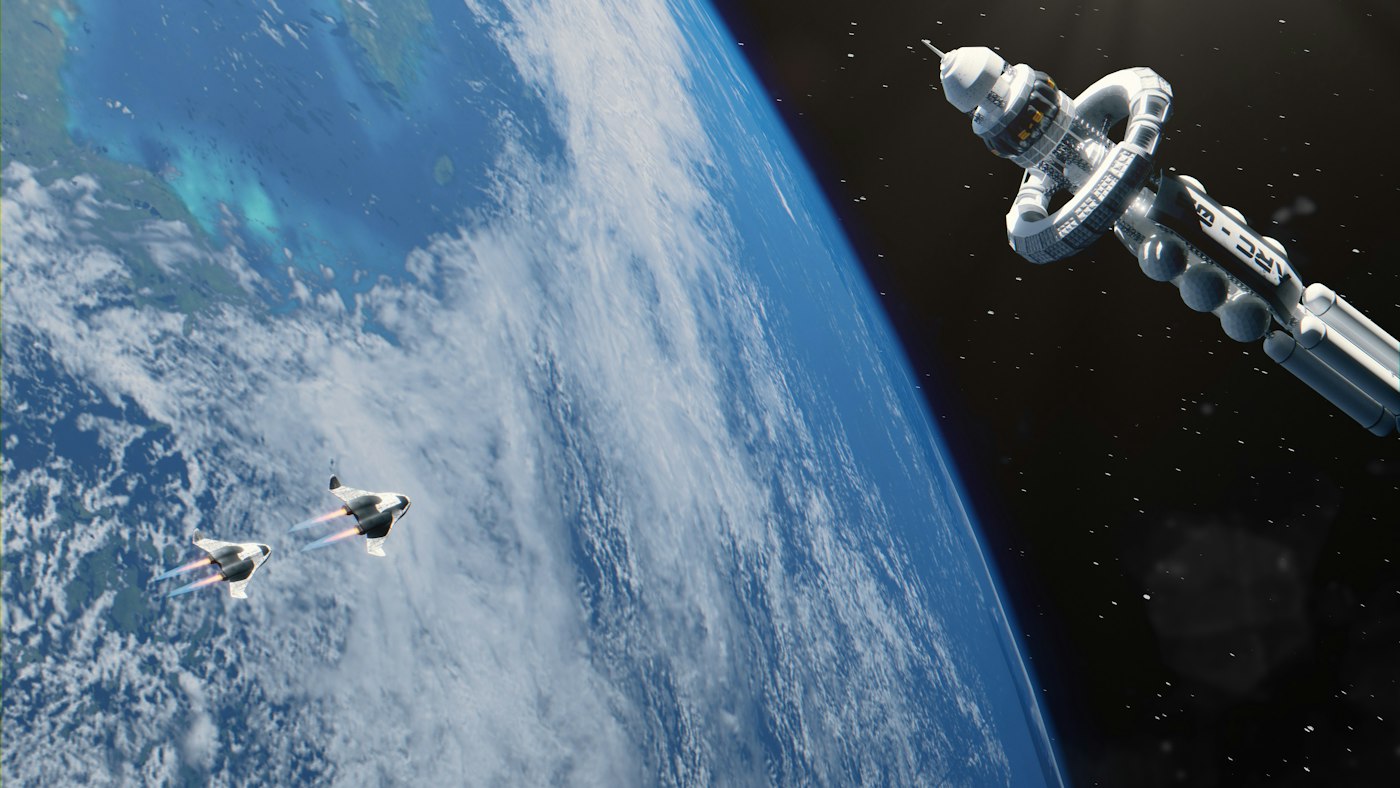
It sounds like a sci-fi plot. Beaming power from orbit, racks of servers floating in zero gravity, AI models trained by starlight. But the idea of building data centers in space has quietly gained traction among engineers and researchers who see it as an answer to two growing problems: the energy hunger of AI and the thermal limits of ground-based infrastructure.
The conversation matters more than you might think. Every new AI model, every cloud service expansion, every crypto transaction adds to a data center load that already consumes about 1-2% of global electricity. That number is climbing fast. So the question isn't really whether space-based data centers are cool — it's whether they solve something ground-based ones can't.
Solar Power, Without the Atmosphere
Here's the part that gets solar engineers excited. On Earth, sunlight passes through atmosphere, clouds, dust, and pollution before hitting a solar panel. By the time it arrives, roughly 30-40% of the energy has already been scattered or absorbed. In orbit, there's none of that. A solar panel in space receives the full, unfiltered spectrum, and it receives it almost continuously — no night cycle if you pick the right orbit.
For context, a portable solar panel on Earth might generate electricity for 4-6 peak hours a day, depending on latitude and weather. In low Earth orbit, that same panel could theoretically produce power close to 24/7. The efficiency gain isn't incremental — it's a different category entirely.
This is the same principle that makes ground-based solar technology from brands like LUMOPAL effective in the first place: maximizing surface area efficiency, optimizing angle and material, squeezing every watt out of available sunlight. The physics don't change in space — they just get dramatically more favorable.
The Heat Problem Nobody Talks About
But here's the catch. Data centers generate enormous amounts of heat. On Earth, we handle this with air conditioning, liquid cooling, evaporative towers, and sometimes entire rivers. None of that works in space.
Space is a vacuum. There's no air to carry heat away through convection. The only way to dump heat in space is thermal radiation — essentially glowing infrared light into the cold void. It works, but it's orders of magnitude less efficient than convective cooling on Earth.
So you end up with a paradox: the same environment that gives you abundant solar energy also traps the heat your equipment produces. A space data center would need massive radiator arrays — potentially larger than the solar panels themselves — just to keep servers from cooking themselves. This single challenge might be the hardest engineering problem in the entire concept.
Getting Power Back — Or Using It There
If you build a solar farm in orbit, you face an obvious question: what do you do with the electricity?
Wireless power transmission — beaming energy via microwaves or lasers down to receiving stations on Earth — has been studied for decades. The physics are sound. The efficiency is not. Atmospheric absorption, beam divergence, and conversion losses mean that by the time orbital solar energy reaches a ground station, you might recover single-digit percentages of what was generated.
But here's the flip side: if the data center itself is in space, you don't need to beam power anywhere. The energy is consumed on-site, by the servers, right where it's generated. The waste heat gets radiated into space. The data gets beamed down as radio or optical signals — which is something we already do with satellite communications every day.
In that sense, a space data center is actually more self-consistent than an orbital solar power station. It doesn't need to solve the power transmission problem at all.
The Real-World Barriers
Engineering challenges aside, the practical obstacles are significant.
Launch costs. Even with Starship bringing per-kilogram launch prices down dramatically, putting thousands of tons of server hardware into orbit is not cheap. A single medium-sized data center might require hundreds of launches.
Radiation. Cosmic rays and solar particles degrade electronics over time. Earth's atmosphere and magnetic field protect ground-based equipment. In orbit, you need shielding or radiation-hardened components — both of which add weight and cost.
Maintenance. When a server fails on Earth, someone walks in and replaces it. In space, that's not an option. You'd need redundant systems, autonomous repair capabilities, or accept regular hardware failures as a cost of doing business.
Space debris. The orbital environment is getting crowded. A collision with even a small piece of debris could destroy a data center module. Maneuvering capability and shielding add more weight.
None of these are dealbreakers individually. Together, they make the economics challenging for the foreseeable future.
So Why Does This Matter Now?
The space data center concept isn't going to replace your local server farm next year. But the research driving it — high-efficiency solar capture, advanced thermal management, radiation-tolerant computing — has direct applications on the ground.
Every innovation in solar panel efficiency, thermal radiator design, and low-power computing that comes from space research flows back into products that work right here. The same engineering that would keep a server rack cool in orbit can make a portable solar setup more efficient in a campground.
LUMOPAL's approach to solar technology — compact, high-conversion panels designed for off-grid scenarios — lives in the same design space as these aerospace challenges. Squeeze more from less. Handle heat intelligently. Make every watt count. Whether the application is a Mars-bound data pod or a weekend camping trip, the fundamentals don't change.
The real takeaway from the space data center debate isn't about building one. It's about what we learn by trying. And the lessons — better solar, better cooling, better efficiency — are already showing up in products you can hold in your hand today.
Explore LUMOPAL's portable solar solutions at lumopal.com