Summer Sun Blazing = Maximum Solar Output? Not So Fast — Here's Why
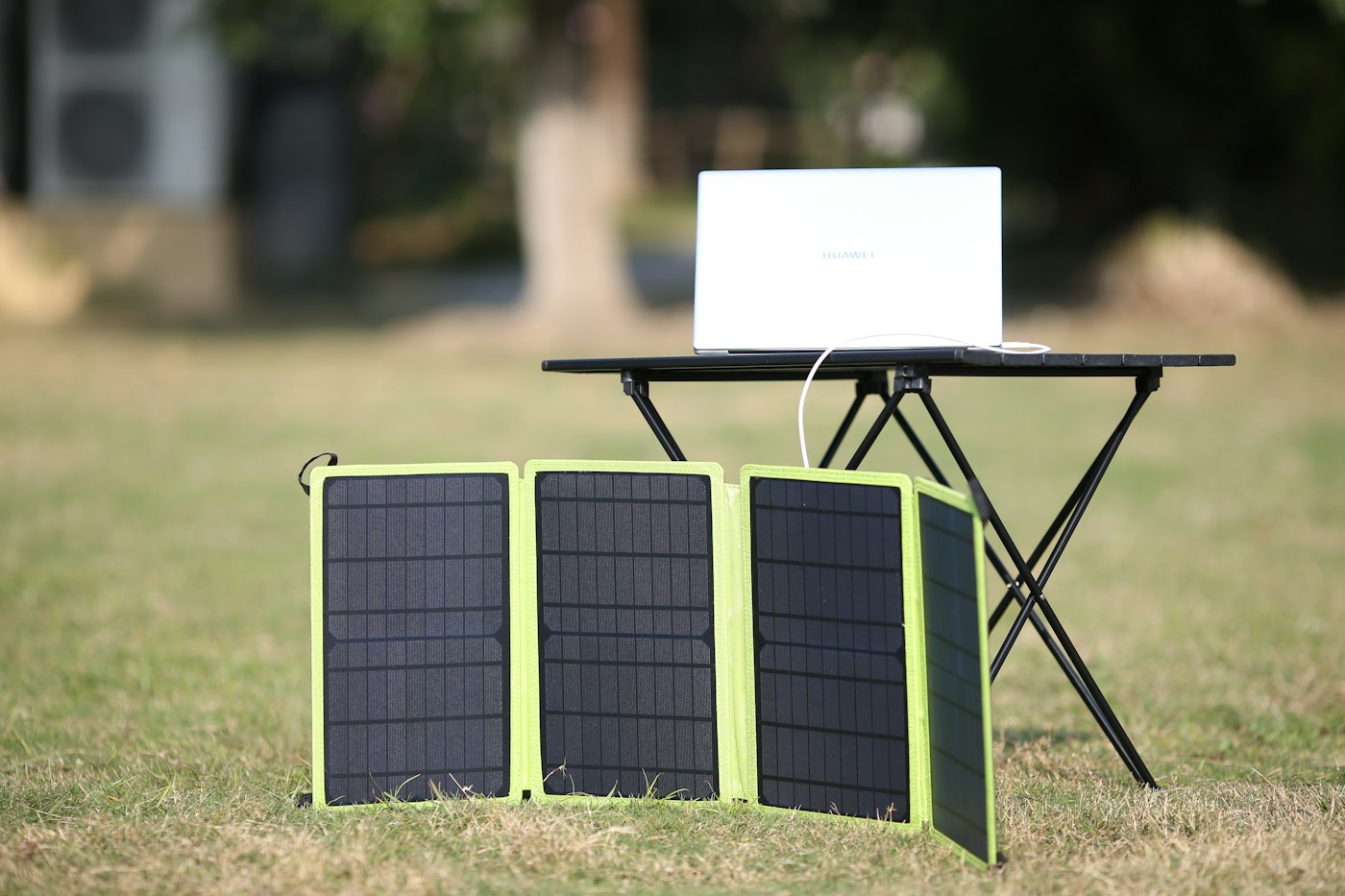
Picture this: it's a sweltering July afternoon. The sun is pounding down, the pavement is almost too hot to walk on, and your portable solar panel is sitting in direct sunlight doing exactly what it's supposed to do — soaking up those rays.
But here's the uncomfortable truth: that solar panel is probably performing worse right now than it did on a mild spring day with fewer hours of direct sun.
Sounds counterintuitive, right? More sunlight should mean more power. That's the conventional wisdom, and it's wrong in a way that matters a lot if you rely on portable solar for camping, RV life, overlanding, or off-grid backup.
The culprit isn't the sun — it's heat. And the gap between what people expect and what actually happens can be as high as 20–25%.
Let's break down why.
The Temperature Coefficient: Solar's Hidden Tax
Every crystalline silicon solar panel has a spec called the temperature coefficient of maximum power (Pmax). It's usually expressed as a negative percentage per degree Celsius, something like –0.35%/°C or –0.45%/°C.
What does this number actually mean?
Solar panels are rated under Standard Test Conditions (STC), which assumes the panel's cell temperature is exactly 25°C (77°F). That's the temperature at which a "60W" panel delivers its rated 60 watts.
But in real-world summer conditions, a dark solar panel sitting in direct sunlight can easily reach 65–70°C (149–158°F) on its surface. That's 40–45°C above the STC baseline.
Here's where the math hurts:
If your panel has a temperature coefficient of –0.40%/°C:65°C – 25°C = 40°C above STC40 × –0.40% = –16% power lossA "60W" panel is now effectively ~50W
At 70°C:
70°C – 25°C = 45°C above STC45 × –0.40% = –18% power lossThat 60W panel is now delivering ~49W
In extreme cases (dark surface, poor ventilation, midday in hot climates):
Panel temp can hit 80–85°CPower loss: 22–24%Your 60W panel? More like 45–47W
That's nearly a quarter of your rated output gone — not because there's less sun, but because the panel is literally too hot to operate efficiently.
Why does this happen?
Solar cells are semiconductors. Like most semiconductors (CPUs, LEDs, transistors), their performance degrades as temperature rises. Higher temperatures increase the internal recombination rate of electron-hole pairs in the silicon — meaning fewer charge carriers make it to the circuit. The voltage drops noticeably, and while current rises slightly, the voltage drop dominates. The net effect is a significant reduction in total power output.
This isn't a defect. It's fundamental physics of crystalline silicon. Every panel does this, from cheap generic units to premium name brands. The only difference is how much.
Summer's Four Hidden Penalties
It's not just temperature. Summer brings a set of compounding factors that most people never account for.
1. The Heat Penalty (the Big One)
Even on a perfectly clear 35°C (95°F) day, your panel's internal temperature will climb to 60–70°C with no active cooling. That alone strips 15–20% off your rated output.
2. Reduced Air Mass and Atmospheric Clarity
Summer heat creates humidity and haze. More water vapor and particulate matter in the atmosphere scatter and absorb incoming solar radiation. On a clear summer day, the direct normal irradiance (DNI) hitting the panel surface can actually be lower than on a crisp, dry spring day — even though the summer sun feels more intense.
The "feel" of intense summer sun is mostly infrared radiation (heat), not the visible/UV spectrum that solar panels convert to electricity.
3. Afternoon Convection Clouds
In many regions, summer afternoons bring convective cloud buildup — those fluffy cumulus clouds that roll in around 2–3 PM. This means intermittent shading and a net loss of direct sunlight during peak hours.
4. High Ambient Temperature = Poor Passive Cooling
If the ambient air is already 35–40°C, the temperature gradient between the panel and the air is small. Heat doesn't dissipate efficiently. The panel runs hotter, longer.
Contrast this with a spring day at 20°C: the panel heats up to maybe 50–55°C, loses only 10–12%, and the cooler ambient air helps pull heat away faster.
So Which Season Is Actually Best?
The answer might surprise you: Spring and Fall.
Net output = (rated power × thermal derating) × daily solar hours
Spring's combination of low thermal loss and decent day length often produces the highest daily energy harvest. Summer's extra sunlight hours can't fully compensate for the 15–20% thermal penalty.
Real-World Data
Research from the National Renewable Energy Laboratory (NREL) and multiple field studies consistently show this pattern:
In temperate climates (30–45°N): April/May and September/October produce the highest kWh per rated watt per day
In hot arid climates (desert regions): Spring and late fall outperform mid-summer by 10–18%
In tropical climates: The "cooler" rainy season months sometimes match or exceed the hot dry season in daily yield
A study published in Solar Energy Materials & Solar Cells tracked monocrystalline panels across four seasons and found that July panels ran 18°C hotter on average than April panels, resulting in a 7.5–9% reduction in conversion efficiency — despite receiving roughly equal daily irradiance.
What You Can Actually Do About It
✅ Maximize Airflow
Elevate your panel. A gap of 5–10 cm underneath allows air to circulate and carry heat away. Lumopal panels come with built-in kickstands for exactly this reason. Use them.
✅ Orient for Morning and Late Afternoon
The hottest part of the day (12–3 PM) is when your panel is least efficient. Shift your panel orientation slightly toward the east in the morning and west in the afternoon to capture more energy during cooler hours.
✅ Choose Panels with Better Temperature Coefficients
The Lumopal Lum Solar 60W uses A-grade monocrystalline cells with a temperature coefficient of –0.35%/°C — better than the industry average. At 65°C, you're losing ~14% instead of ~16–18%.
✅ Use Reflective Ground Covers
Place a reflective tarp underneath your panel to reduce ground-radiated heat and boost reflected light.
✅ Keep Panels Clean
A thin layer of summer dust can reduce output by 5–15%. A quick wipe before setup pays for itself in the first hour.
✅ Avoid Hot Spot Mounting Surfaces
Never mount directly on dark metal surfaces without an air gap. These surfaces can reach 70–90°C in summer sun.
The Lumopal Advantage
We designed the Lum Solar 60W and 100W with real-world conditions in mind:
A-Grade Monocrystalline Cells: Lower defect density = less efficiency loss at high temperatures
–0.35%/°C Temperature Coefficient: Among the best in portable solar
Built-in Kickstand: Promotes airflow and optimizes tilt angle
ETFE Lamination: Better light transmission and heat dissipation
IP64 Rated: Dust-tight and water-resistant for summer conditions
2-Year Warranty: Built for real-world use
The Bottom Line
The difference between a 25°C spring day and a 35°C summer afternoon can be a 15–20% reduction in your panel's effective output.
Understanding this changes how you plan your solar setup:
Don't chase midday sun — it's when your panel is least efficient
Prioritize ventilation — a few centimeters of air gap can save you 5–10% of output
Know your panel's temperature coefficient — it's one of the most underrated specs
Change your expectations — if your 60W panel delivers 48W on a hot July afternoon, it's not broken. It's hot.
The best season for solar isn't the one with the most intense sun. It's the one with the best balance of light, temperature, and atmosphere. For most of us, that's spring and fall.
But when summer does roll around — and you still need power for that camp fridge or your devices — the right panel, placed the right way, makes all the difference.